
Plant Library
Dieffenbachia Care Guide
Dieffenbachia seguine (dumb cane)
By the Plantshop.com Editorial Team · Updated · How we research · Report an error
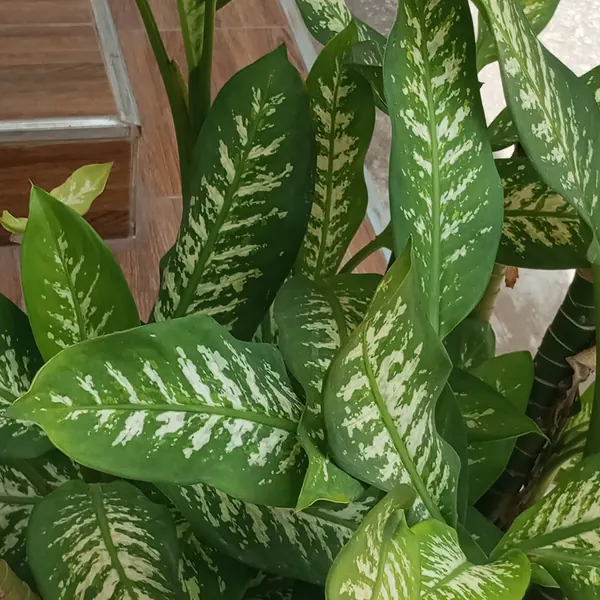
Dieffenbachia (dumb cane) has large leaves splashed with cream and green and grows fast in ordinary rooms. Its sap is irritating, so it is not a choice for homes with pets or toddlers who chew plants.
Plant profile
- Light
- Medium to bright indirect light
- Water
- When the top 1-2 in is dry
- Humidity
- Average to medium
- Pets
- Toxic to cats and dogs (ASPCA) [ASPCA]
- Difficulty
- Easy
- Size
- 2-5 ft
- Growth
- Moderate
Light
Medium to bright indirect light. Rotate the pot every few weeks so growth stays even.
Water
When the top 1-2 in is dry. Always use a pot with drainage holes and empty the saucer after watering. Plants use far less water in winter.
Humidity and temperature
Humidity: average to medium. Most houseplants prefer 60-80°F (16-27°C) and dislike cold drafts and heating vents.
Soil and feeding
Use a well-draining potting mix with bark or perlite for air. Feed lightly in spring and summer with a balanced houseplant fertilizer at half strength; skip feeding in winter.
Our tip
Wear gloves when pruning; the sap irritates skin and especially the mouth.
Common problems
- Yellow lower leaves: Overwatering or normal aging.
- Leggy stem: Low light; cut back and re-root the top.
- Brown edges: Dry air or inconsistent watering.
Pets
Toxic to cats and dogs (ASPCA), according to the ASPCA plant list. If a pet chews it and shows symptoms, call your vet or the ASPCA Animal Poison Control Center. Check any plant in our Pet-Safe Plant Checker.
Ready to buy? See sizes, what to check and which shops list it.
Buy a dieffenbachia online