
Plant Library
Croton Care Guide
Codiaeum variegatum
By the Plantshop.com Editorial Team · Updated · How we research · Report an error
Buying a croton? See where to buy it online, which size to choose and what to check on arrival →
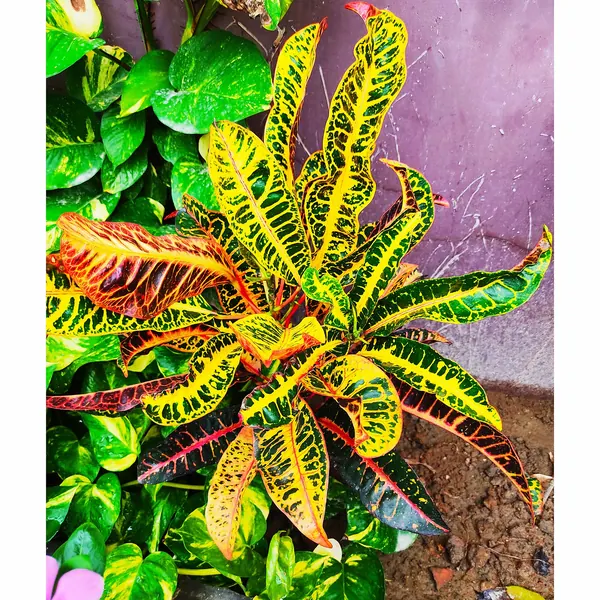
Crotons are grown for their leaves: red, orange, yellow and green, often on the same plant. The color is light-driven, so the brighter the spot, the more vivid the plant. Croton 'Petra' is the variety you will see most often.
Buy a croton 3 verified shops, checked 21 Oct 2026
Amazon links open an Amazon search, not a specific product we have tested; prices and sellers vary. As an Amazon Associate we earn from qualifying purchases. Disclosure.
Plant profile
- Light
- Bright light with some direct sun; color fades in low light
- Water
- When the top 1/2 to 1 in of soil is dry; keep evenly moist, never soggy
- Humidity
- High; 50%+ keeps leaves clean
- Pets
- Poisonous (NC State Extension); its sap can irritate skin and mouths. Keep away from pets [ASPCA]
- Difficulty
- Moderate
- Size
- 2-4 ft indoors
- Growth
- Moderate
Thanks, you are on the list! Open the calendar →
Light
Bright light with some direct sun; color fades in low light. Rotate the pot every few weeks so growth stays even.
Water
When the top 1/2 to 1 in of soil is dry; keep evenly moist, never soggy. Always use a pot with drainage holes and empty the saucer after watering. Plants use far less water in winter.
Humidity and temperature
Humidity: high; 50%+ keeps leaves clean. Most houseplants prefer 60-80°F (16-27°C) and dislike cold drafts and heating vents.
Soil and feeding
Use a well-draining potting mix with bark or perlite for air. Feed lightly in spring and summer with a balanced houseplant fertilizer at half strength; skip feeding in winter.
Our tip
Expect it to drop some leaves in its first weeks at home. That is shock from the move, not a dead plant. Keep it warm, bright and out of drafts and wait for new growth.
Common problems
- Sudden leaf drop: Move or temperature shock; also cold below about 50°F (10°C).
- Leaves turning green: Not enough light; move it to a sunnier window.
- Fine webbing: Spider mites, which love dry air. Rinse the leaves and raise humidity.
Pets
Poisonous (NC State Extension); its sap can irritate skin and mouths. Keep away from pets. Check the ASPCA plant list. If a pet chews it and shows symptoms, call your vet or the ASPCA Animal Poison Control Center. Check any plant in our Pet-Safe Plant Checker.
Ready to buy a croton? Compare the shops we verified, or search Amazon.
Amazon links open an Amazon search, not a specific product we have tested; prices and sellers vary. As an Amazon Associate we earn from qualifying purchases. Disclosure.
Free download
Free 12-month plant care calendar
Keeping a croton happy all year? Get our free month-by-month calendar: when to water less, when to feed, when to repot, and the seasonal notes for all 71 plants in our library.
Thanks, you are on the list! Your free calendar is ready: Open the 12-month plant care calendar →
Privacy policy — how we store emails for the calendar list.